Graham’s Gems – Bike braking, front, back, both?


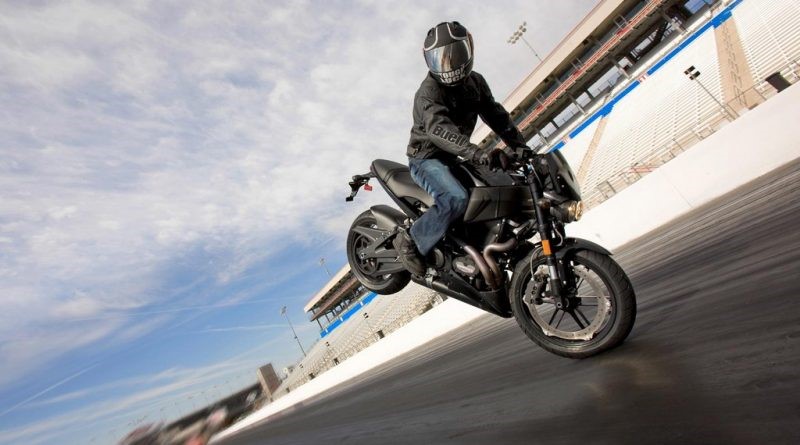
Wheelie

Recently I had a very good discussion with Andy Goodwin, an associate in the Bike Section who I’m working with, on the correct use of brakes on a bike. He had a different view from the one I was advocating and this set us both reconsidering and rethinking what was considered as ‘gospel’ and advocated in the various motorcycling handbooks and resources we use. Andy has a love of knowing the physics of how something works, and did some internet research and found a very interesting feature on motorcycle braking which poses questions and provides answers on effective braking. For example, the first question posed was ‘Which brake is the most effective?’

The explanation provided was that the front brake is the most effective, giving between 60 and 80% of the bike’s stopping power in hard stops, depending upon surface conditions.  This is because most of the weight of the bike and rider transfers forward on to the front wheel when the brakes are applied. A common example of weight transfer is when you trip on a gutter – your feet stop but momentum keeps the top of you going and you fall flat on your face. The weight transfer that takes place under braking on a motorcycle pushes the front wheel on to the ground and makes it grip very well.

Another question posed was ‘Is braking a natural skill?’ The explanation provided was that braking, as with any riding skill, is a learned skill, not a natural one.

This means you must practice the correct braking skills enough to make them an instinctive reaction before you can be sure that you will do the right things in an emergency. Overseas research has shown that, because of panic overpowering a rider’s conscious reactions, nearly a third of all riders do absolutely nothing in an accident situation: they don’t even apply the brakes! If, however, your high-level braking skills are so well learnt that they are instinctive, you will do it right, no matter what the situation. However, this requires you to do a lot of high-level braking skill practice: the skills will not come with normal everyday riding.

A number of questions are posed in the article, and one which provides most debate is rear brake application. Many bike racers don’t use the rear brake at all, and for others it’s minimal. Lots of road bikers apply that practice to their road riding, thinking that’s how you brake on a bike. If you want to find out what’s said about this and much more, click on this link: www.webbikeworld.com/Motorcycle-Safety/braking-tips.htm or type the link into your internet browser.

My thanks to Andy for finding the article, and I hope it will provide some debate about motorcycle braking.

IAM Skills Day at Croft Circuit by Norman Stansfield

Signing on for the morning session took place from 8.15 am: this was not a problem as my wife, Mary, had located a superb country hotel only three miles from the track.

The briefing covered all the salient points necessary for this type of event, as one would expect, safety and no damage to the cars of course being imperative. There were approximately 24 drivers present, who were allocated to the instructors, two per instructor. Track running time for each run was around 20 minutes, and then the instructor sat with his other driver for their 20 minutes. This was a very good system, as it allowed the drivers time to relax and the cars to cool down before the next session.

There was a diverse array of cars involved – an Astra, a couple of MX-5s, a Honda S2000, Mazda and BMW saloons, a Volvo estate, three Porsches, a Ford hatchback, and others.

In all we completed five 20-minute sessions, with the track open from 9.30 am until 12.30. The track was laid out with cones for the various gear changes, braking points, corner apexes, turning-in points, etc.

During the morning everyone increased their original performance, carrying more speed through and out of the corners on this fairly tight course. At the briefing, the recommended speed down the two 300-400 metre straights was 90 mph. Initially my speed was 80-85 mph. My instructor, Toby, ignored the recommendation, and we finished up at 95-100 mph in my 31-year-old 911.

Skills days allow anyone to experience the potential of their car, and speed is not the ultimate aim. The E-reg Volvo estate was driven by a gentleman in his mid-70s who had never driven on a track before, and despite a couple of ‘offs’ at the hairpin bend, he really enjoyed the experience.

Another skills day at Croft was scheduled for 28 September, but I understand that this has been put on hold due to lack of entries. I feel that this is a shame because so much more awareness for road driving can be learned by taking part. I have an entry at Thruxton (a circuit which I have never driven)on 28 September, so maybe more later.

Do traffic lights cause more harm than good?

The Telegraph has recently carried some interesting articles and correspondence about the value or otherwise of traffic lights.

It reports that in the UK there has been a 25% increase in the number of traffic lights since 2000. Some commentators suggest that removing many of our traffic lights would improve road safety by encouraging us to be more wary at the wheel (or handlebars). Although this appears counter-intuitive, the Transport Research Laboratory says ‘It is a myth that signals guarantee safety.’

The idea of reducing road clutter has been extensively tested in Holland, most obviously in the town of Drachten, which removed virtually all its lights at about the same time we started massively increasing ours. The result has been improved traffic flow, fewer accidents and fewer fatalities. Hans Monderman, the man behind the Drachten experiment, compared his philosophy of motoring to an ice rink: ‘Skaters work out things for themselves, and it works wonderfully well. I am not an anarchist, but we only want traffic lights where they are useful and I haven’t found anywhere they are useful yet.’

A study by the British Infrastructure Group of MPs and peers led by the former Cabinet minister Grant Shapps, warned that poorly designed junctions contribute to congestion. It surveyed 85% of local authorities, who are responsible for 93% of the country’s roads, and found that across the UK’s 245,000 miles of roads, there is a ‘controlled junction’ or crossing every 5.7 miles.

The study, backed by the AA, the RAC and senior politicians, called for a ban on the installation of new road controls, and recommended that traffic lights should be switched off and parking restrictions eased, because the ‘anti-car’ attitude of many councils was clogging up the roads. The report recommended that councils should switch off ‘huge numbers’ of traffic lights, take down needless signs and create more open, ‘shared’ road spaces. This would force drivers, cyclists and pedestrians to take more responsibility for their own safety, co-operate with each other and speed up the flow of traffic.

Mr Shapps, the Conservative MP for Welwyn Hatfield, said: ‘Removing many of these controls, particularly traffic lights, would go a long way to making road travel more efficient and better for the economy, and saving individual motorists money.’

The Dutch town of Makkinga removed all signs and other controls with success. In Ashford, Kent, traffic lights were removed in 2008 and the road layout was simplified. Accident rates fell by 41%, with evidence that congestion has eased, despite a rise in the number of road users.

It is estimated that delayed journeys caused by too many traffic controls costs the economy £16 billion a year, the equivalent of £514 for every registered car in the country. Here are some comments in letters to the Editor of The Telegraph:

‘After many years in the heavy commercial vehicle industry, I have been aghast to see the continuous move toward the installation of more and more unnecessary traffic lights, most of which significantly slow down journey times. A 44-ton truck grinding to a stop at a formerly free-flowing roundabout is an insult to the intelligence. The cost, not least to the environment, is appalling.’

‘The Peahen junction in St Albans is classic in this regard. When the lights work, there is chaos on every approach. When the lights are broken everything runs smoothly.’

Alternate way to wash your Honda

A driver in Epperstone, Nottinghamshire, thought some water on the road was just an overflowing drain, and tried to drive through it. But it turned out to be running into a sinkhole: ‘All of a sudden the car was sucked across the road and I ended up in the hole in the road. The water came flooding in over my knees and eventually it was above the dashboard. It was fairly hard to escape… the car kept locking and unlocking itself so I had to get out of the passenger side, which was difficult.’

At least it says something for how well Honda lights keep going in wet conditions.

Pot holed Honda        Pot holed Honda1

(Copyright of pictures not known, but acknowledged.)

It seemed like a good idea at the time……….

‘Keyless’ car operation, where a car can be opened and driven without operating a key as a remote control or putting it into a lock, provided that the user has the key on their person, seemed to be one more modern electronic convenience. At present, 95% of European car makers offer keyless systems.

Unfortunately, the German ADAC has created two radio devices, an amplifier that must be positioned near the victim’s key, and a receiver that should be placed near the car, which enable a thief to unlock and steal the victim’s car without access to the key. They have been able to open and drive away a wide range of popular models, and believe CCTV footage shows thieves already using similar equipment.

Car manufacturers have not yet come up with an answer. Suggestions for keeping your car safe include keeping your keys in the freezer or a Farady cage, a device that blocks radio signals.

A Bigger Bang for your Buck

It is reported that the SNP-controlled Perth and Kinross Council has changed its definition of a pothole so that it can save money by not repairing so many. It has decided that potholes have to be at least 60 mm, nearly two and a half inches, deep before it will consider filling them. The previous minimum depth for repair was 40mm.

The council hopes to save £120,000 a year on pothole repairs, but has already been paying out an average of £16,000 a year on pothole-compensation claims.

An RAC spokesman commented that ‘The larger a pothole becomes, the greater risk it represents to road users and the more costly it becomes to repair. Hitting a large pothole has the potential to cause serious problems, from damaged shock absorbers and distorted wheels to broken suspension. In the worst cases, a pothole could cause a driver to lose control of their vehicle.

‘While in the short term the council might save money by repairing only larger potholes, it is saving up an expensive problem for further down the line.’

Tim’s tips – April 2016

Tims tipsTOADS CROSSING

The starter activity at our recent Observer’s Training Evening was to challenge observers to name the creatures which feature on triangular warning signs. (How many of the six creatures in Know your traffic signs, pages 14-15, can you name?)

One example is the migratory toads crossing sign. I didn’t realise that local councils only display this sign at appropriate times of the year (thanks to Martin for that). So I went home and did some research.

The European Common Toad is found throughout the country, while the Natterjack is found in north-west and southern England. Common toads are very particular about where they breed and often migrate back to their ancestral breeding ponds each year. They follow the same route, regardless of what gets in their way, which sometimes leads to them crossing roads.road scene

Global warming has led to a change in their breeding and migrating patterns and this forced the Department for Transport into a rethink on the rules which govern temporary road signs. As the law stood before 2009, councils could only put up ‘migratory toad crossing’ signs between February and May.

Because of changes in our climate, toads are breeding and migrating earlier in the year. So the DfT announced in 2009 that these signs will go up in January, giving the toad – officially a ‘biodiversity priority species’ – an extra month’s protection.

It is estimated that there are around eight million toads in Britain, rather fewer than there were just after the Second World War. It’s also estimated that 20 tonnes of toads are killed on the UK’s roads every year.

In a Telegraph article Edmund King, the AA’s President said: ‘To be honest I have always wondered what drivers are supposed to do if they see amphibians in the road in front of them.’ Amphibian and Reptile Conservation advise the following:

  • Slow down carefully and, if possible, drive safely around toads. (I’d never thought of that.)
  • Note your location, the approximate number of creatures and, if possible, the direction the toads are moving and report this to Amphibian and Reptile Conservation – they map (through Google Earth) where crossings occur, support the process of sign erection and in some places help coordinate volunteer ‘Toad Patrols’.

For more information including details on migratory toad crossings near you see froglife.org.

FOLLOW MY LEADER, OR SEE MY WAY?

My daily commute is a pleasant rural drive, but it coincides with school buses taking students to and from towns in the High Peak.

When I was a child and travelled to school by bus, we purchased bus passes. This allowed us to board quickly so the bus held up the traffic only briefly, even when collecting a full load. I have noticed that the school buses I follow now take for ever to pick up their passengers. With only one child boarding I would expect the bus to be away promptly. But no. We sit. And wait.

I’ve no idea why boarding takes so long but there is a consequence.

Motorists get impatient and overtake the bus, blindly following one another without any regard to oncoming traffic. It can be difficult to see if there is an oncoming vehicle (the yellow car in my graphic) especially if one of the overtaking vehicles is a van. Even so, drivers just plough on regardless and oncoming traffic is confronted and has to give way.

If you hold back behind the bus to check if it is safe to overtake rather than following the procession, traffic following you is likely to get impatient. Even so, this is what I usually do If I can’t see. I won’t cross the centre line unless I can see it is safe to do so.

Do you know why the bus drivers take so long to pick up their passengers? Do write in and tell me….

Tim’s tips – January 2016

Same old story…. I have just read a leaflet pushed through my front door by a local political party. One item caught my attention. The party in question want to reduce a short section of the A6 from 40 to 30 mph and reduce the speed limit in a housing estate to 20 mph.

I’m not bothered about the 20 limit because one can hardly do more than that there anyway. But the 40 mph section of the A6 is perfectly safe and gives motorists a chance to relieve the tedium of the endless 30 mph sections (which used to be 40 mph until they were further restricted).

They have not secured my vote!

The leaflet arrived at the same time as a friend lent me a book containing reprints from Car magazine originally published in February 1966. An article that caught my eye was written by Stirling Moss and titled:

‘It’s the limit, 70. Don’t just stand there. Let’s get together and act. Now.’

He was responding to the decision by the Government of the day to make the then-temporary 70 mph national limit permanent. He wrote ‘People realise that speed is what M-roads are built for…. The realisation that others may be going faster than you are keeps you alert, keeps you out of the fast lane and on the ball.’

He blamed motorway accidents in normal weather conditions on an ‘irresponsible section of the public which can never be curbed.’ He went on, ‘I mean you can’t stop a certain percentage of criminals killing people even though they may know they’ll get hanged for it. Without an overall limit, the man who is going slowly is more inclined to keep to the left and let the faster man pass him on the right.’

He then went on to discuss the bunching effect caused by all drivers in all lanes sticking to 70 mph, usually following too closely, and the consequences of a mistake by one driver being amplified and causing a serious collision. He considered the argument that an accident at 90 mph would be more serious than one at 70 mph: his view was that cars could not withstand collisions at 90 any more than at 70, and the consequences would be much the same. (Even today they don’t test crash cars at over 40 mph.)

He continued ‘A car is only safe if it’s standing still, with the engine switched off, in a garage: as soon as you start it up you can get asphyxiated by carbon monoxide, and the moment the thing begins to move at even two miles per hour you can run somebody over. The same car does not suddenly become more dangerous as soon as it exceeds 70mph…. It depends almost entirely on what you hit and how hard you hit it.’

He went on to say that in racing you are most vulnerable to a crash when you are either leading or losing by a large margin. That is when concentration levels can be lower and errors made. The unrealistically low speed limits imposed today are causing low concentration levels and boredom, two common ingredients in a collision.

As part of his article Stirling Moss encouraged readers to cut out and send the following to Mrs Barbara Castle MP, the then Minister of Transport:

Madam,

Like Stirling Moss, I am seriously concerned at the incidental effects which the nationwide 70 mph speed limit is having on an already impossible traffic situation. As a thinking individual I doubt sincerely that the restriction, in itself, will have any beneficial effect.

With Mr Moss, I urge you to do all in your power to see that the limit is not extended as a sop to ‘public opinion.’

[The limit stayed, its effects as Stirling had predicted; 2015 was the 50th anniversary of its being made permanent. For our newer members, we will shortly re-run our 40th Anniversary article about it.]

MEMBERS’ SPECIAL CARS – HILARY ADAMS: MY HONDA CONCERTO

Group member Hilary Adams wrote in mid-November:

’Some months ago you asked whether any IAM member had a special vehicle that they might like to be featured in the Congleton Newsletter.

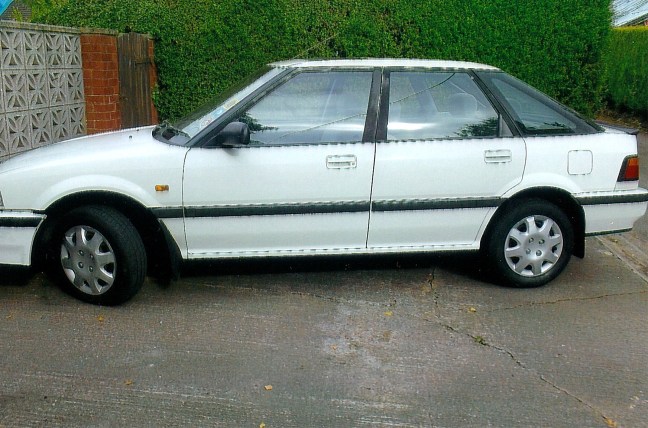
This is my beloved Honda Concerto, which was 22 years old in August, when it once again sailed (drove?) through its MoT.IAM Hilary Adams' Honda

When I bought it for £3,000 in 2005, it had only 12,000 miles on the clock, and was in perfect condition. I asked the salesman why it was such a bargain, and he replied that its previous owner was an elderly gentleman who had it serviced meticulously, and never averaged more than 1,000 miles a year – but nobody wanted such an old-fashioned car! Now

Incidentally, it was much admired by Bob Brittain when I passed my IAM test in it three years ago, and this week I drove it successfully on a Mature Driver’s Assessment with John Hulse.’it’s coming up to 70,000, and my family think that I should downsize to a model more suited to an 88-year-old, but I love it dearly.

Thanks, Hilary, for sharing your car story with us. Many Group members must own, or have owned, a car or bike worth telling us about – something special from your early days, or a particularly high-performance model.

The Editor can think back to a 1924 Morgan Brooklands three-wheeler, complete with air-cooled side-valve v-twin; a 147 cc James Captain and a 250 cc Excelsior Talisman two-stroke-twin motor­bike; a 1936 Singer Le Mans two-seater, a bread-and-butter Ford Anglia saloon and a Triumph TR3. A Honda 90 bike was the first internal-combustion machine that he owned that did not consume or leak oil! Then came a TR4, Triumph 1300, Triumph 2000, and three P6 Rovers, a 2000TC, a 2200TC and a 2000, plus a Hillman Imp and a Renault 4. We had a VW Combi in Kenya, then back in the UK a Peugeot 205, a VW Passat estate, a Subaru Outback and his present Forester 2.0 XT, and two Kias and a Vauxhall Agila for Judy.

But he does enough writing around here already! if you have owned an interesting car or bike, old or new, or one that meant something special to you, tell us about it, please. Don’t worry if you are not a polished writer – just send Peter some notes, ideally with photos, and he will turn them into a suitable article.